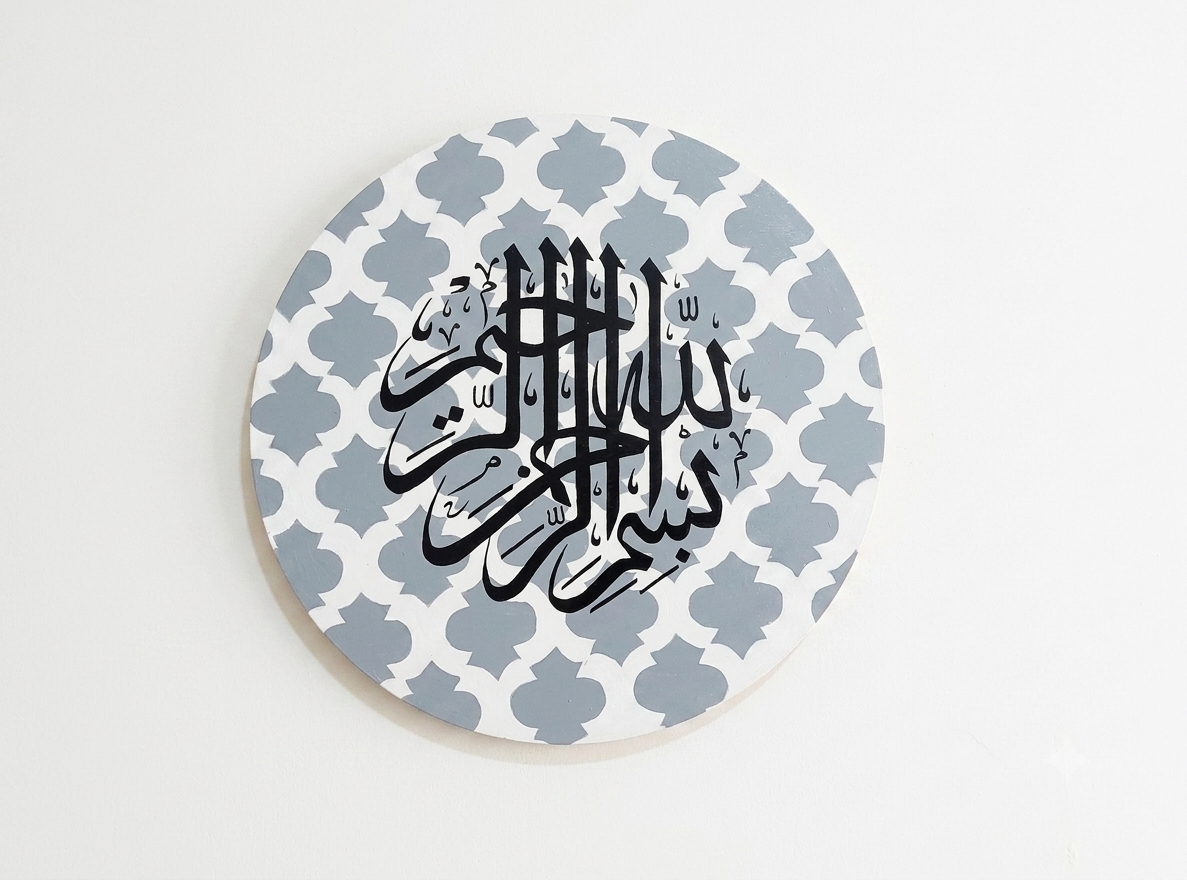
Persian art rarely gets discussed as its own tradition in the West — it's often folded into "Islamic art" as a subcategory. That undersells it. Persian visual culture has its own distinct visual language, built over more than a thousand years, and it shares deep — but not identical — roots with the Arabic calligraphic tradition we work in at Ridaa Art.
A tradition built on three pillars
Persian art is usually grouped into three core practices: miniature painting, ornamental pattern, and calligraphy. Miniature painting reached its height under the Safavid dynasty (16th–17th century), illustrating manuscripts of poetry and history with intricate, jewel-toned scenes. Ornamental pattern — geometric tessellation, floral arabesque, tilework — covers everything from mosque architecture to book bindings. Calligraphy sits at the center of both, since Persian manuscripts were as much about how the text looked as what it said.
Where calligraphy fits into Persian art
The script most associated with Persian calligraphy is Nastaliq — a flowing, hanging style developed specifically for the Persian language in the 14th and 15th centuries. Where Arabic scripts like Thuluth or Kufic tend toward geometric structure or bold, upright strokes, Nastaliq leans diagonally and curves downward, giving it a softer, more cursive feel. It became the standard for transcribing Persian poetry — the work of Hafez and Rumi was traditionally copied in Nastaliq, not in the more angular scripts used for Arabic religious texts.
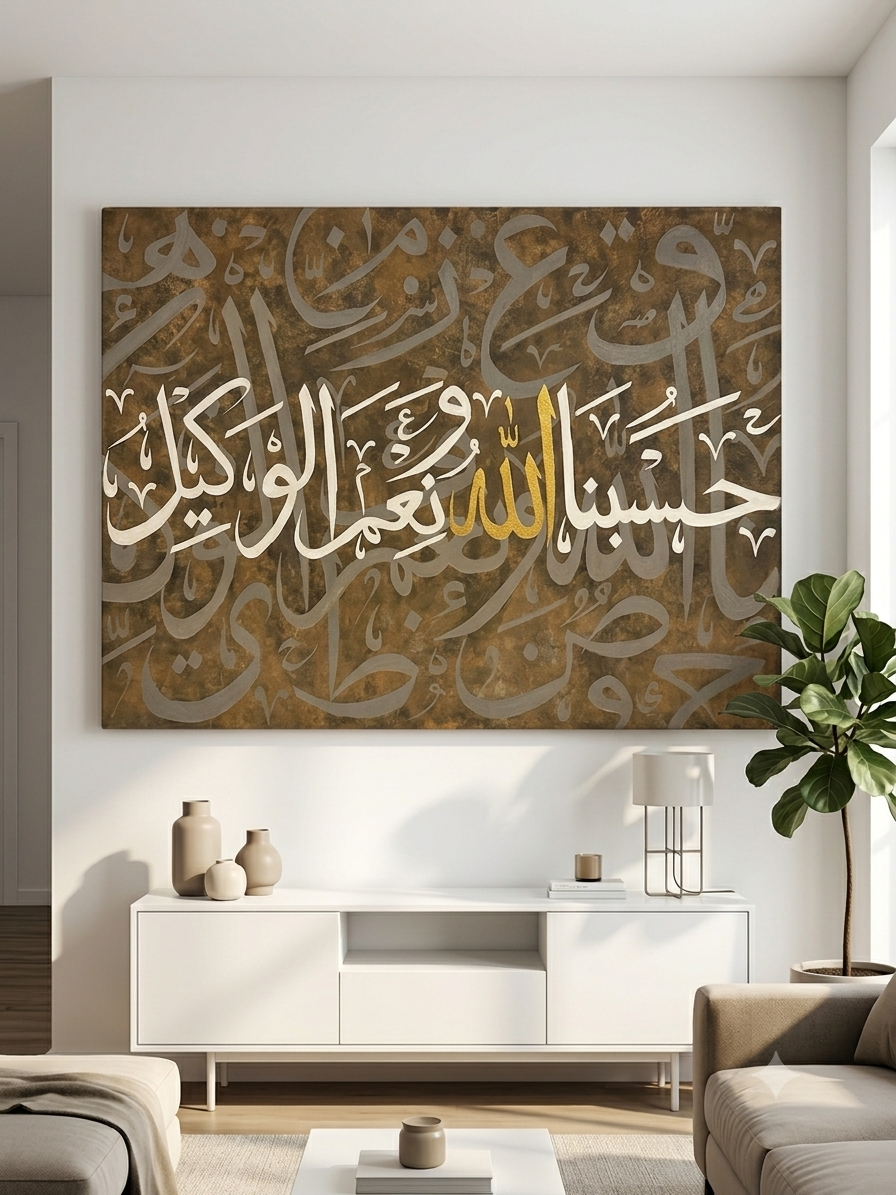
Persian and Arabic calligraphy don't compete — they grew from the same root and kept influencing each other for centuries.
Why Persian and Arabic calligraphy share roots
Persian (Farsi) is written using a modified Arabic alphabet, with a handful of extra letters added for sounds that don't exist in Arabic. Because of that shared script foundation, calligraphers across the Islamic world studied and borrowed from both traditions — a piece commissioned in Ottoman Turkey might use a Persian-influenced flourish, and Persian court calligraphers studied classical Arabic scripts as part of their training. The two traditions are closely related, not interchangeable, and a calligrapher working in both knows where the techniques diverge.
Bringing Persian art into a modern home
At Ridaa Art, several of our commissions use Persian script and ornamental detailing alongside Arabic lettering — a Nastaliq-style verse, for instance, or a piece bordered with Persian floral patterning. If you're drawn to that softer, more cursive look rather than the bolder geometry of Kufic or the ornamental density of Diwani, it's worth mentioning during your consultation — we can design specifically toward that aesthetic.