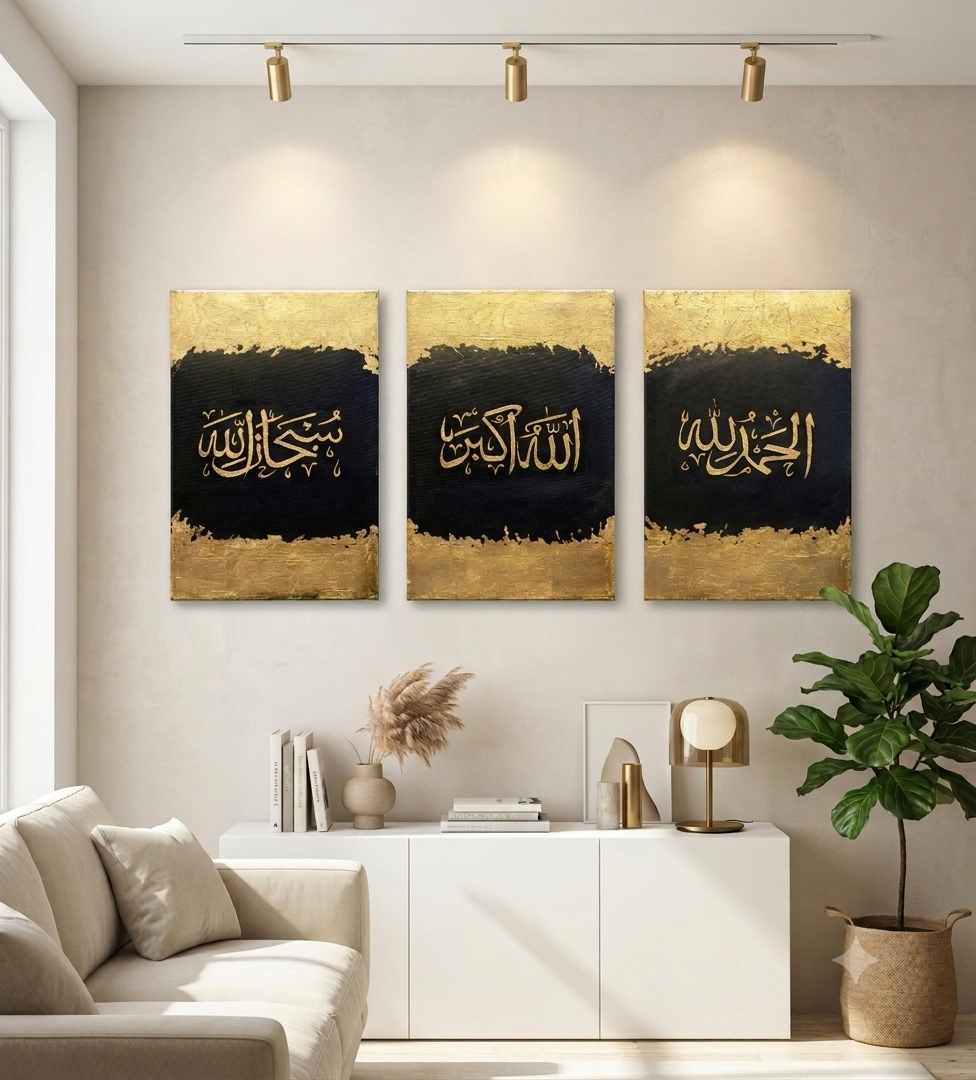
Searching "best paintings for living room" turns up endless mood boards and not much practical advice. Most living room wall art fails for the same handful of reasons — wrong scale, wrong placement, or a piece that looks fine in a photo but says nothing once you've lived with it for a month. Here's what actually matters.
Scale first, subject second
The single most common mistake is buying art too small for the wall. A living room usually has high ceilings, a long sofa run, or both — a piece needs real presence to hold its own. As a rule of thumb, wall art above a sofa should span roughly two-thirds of the sofa's width. That's often larger than people expect, and it's the difference between a piece that anchors the room and one that looks like an afterthought.
Where it goes changes what works
- Above the sofa: the most common spot, and the one with the most flexibility — bold colour, large scale, and strong contrast all read well here because there's distance between the viewer and the piece.
- Facing the entryway: the first thing guests see. This is where a single striking piece does more work than a gallery wall.
- Beside a window or fireplace: needs a narrower, taller format and benefits from a piece with vertical lines or flowing script rather than a wide horizontal composition.
Calligraphy as a living room centerpiece
Large-format Arabic calligraphy works particularly well in living rooms because it reads on two levels at once: from across the room, the flowing script functions like an abstract composition — line, rhythm, negative space. Up close, it resolves into meaning. A piece in Thuluth script, finished in black and gold or set against marble-effect background, sits comfortably in both a minimal modern living room and a warmer, more traditional one.
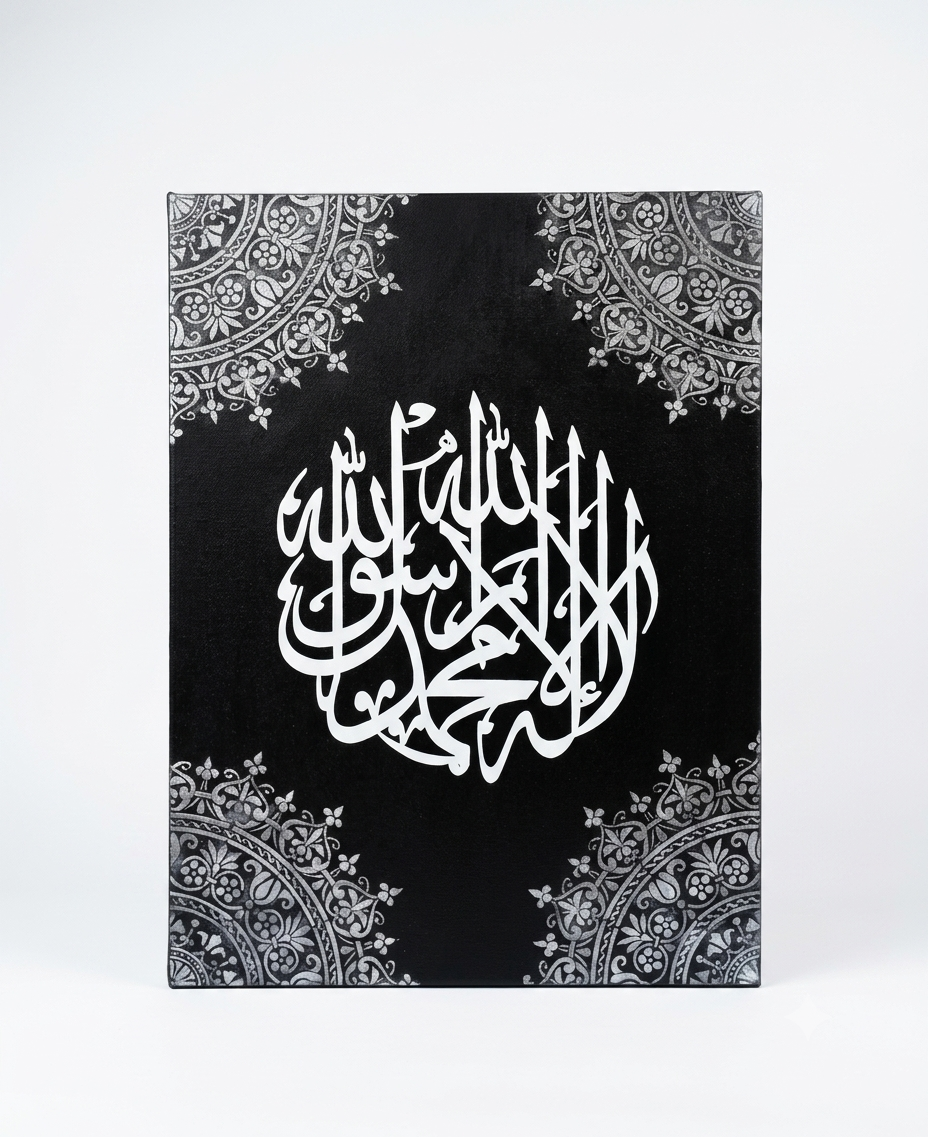
A living room piece has to work from the doorway and from the sofa — most paintings only manage one of the two.
Finish and frame matter more than people expect
The same composition in a thin black frame versus an unframed canvas versus a metallic finish reads as three completely different rooms. For calligraphy specifically, a black-and-gold finish tends to suit warmer, more layered interiors — think brass accents, deep greens, wood tones. A neutral or monochrome finish suits a pared-back, Scandinavian-leaning room where you want the script itself to be the only strong visual statement.
Getting it right the first time
Because a living room centerpiece is a bigger commitment than a smaller accent piece, it's worth sending photos of the actual wall and sofa before committing to a size. At Ridaa Art, every custom piece starts with exactly that — your room, your wall, your light — rather than a fixed size guessed from a product photo.